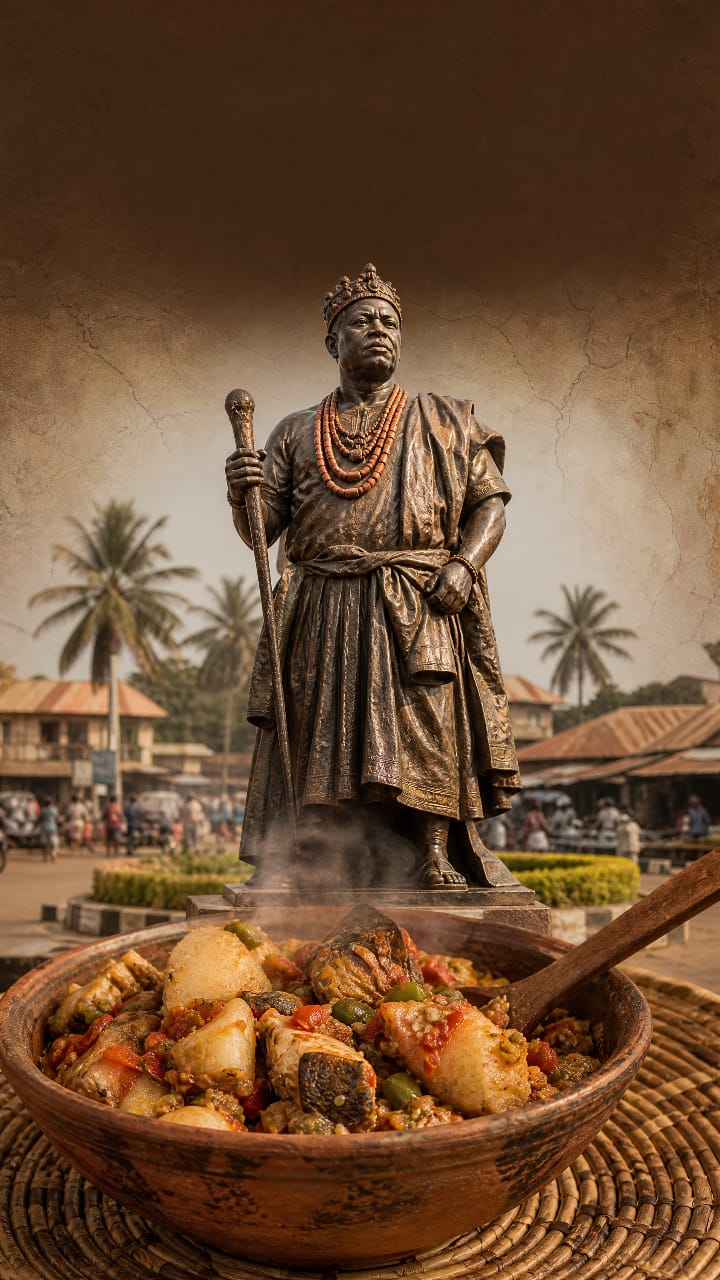
Obanta Day: The Story of Obanta, Ijebu-Ode and the Roots of Ijebuland
OBANTA DAY: THE STORY OF OBANTA, IJEBU-ODE AND THE ROOTS OF IJEBULANDWho was Obanta? What is Obanta Day? Why is Ikokore connected with the celebration? And why does the name Omo Obanta still matter today?When the world hears Ijebu-Ode, one of the first cultural celebrations that comes to mind today is Ojude Oba.The magnificent outfits.
The Regberegbe age groups.
The horses.
The music.
The family associations.
The spectacular display of Ijebu culture.But Ijebuland has a much deeper cultural story.Long before today's social media videos and international attention, the people of Ijebuland carried stories of migration, kingship, traditional institutions, food, spirituality and community.One of the most important names in those traditions is Obanta.WHO WAS OBANTA?Obanta is traditionally identified with Ogborogan, a foundational figure in the early history of the Ijebu kingdom and one of the earliest names associated with the Awujale institution.According to Ijebu tradition, Obanta migrated from the Ile-Ife area towards Ijebuland following the death of his maternal grandfather, Olu-Iwa.One famous tradition says that when he arrived, people exclaimed:Oba wa n ita!Meaning approximately, The king is outside.The expression is traditionally associated with the origin of the name Obanta.The chronology of Obanta's reign is not completely settled. Some traditional accounts place his reign around 1430 to 1445, while historical scholarship has proposed different dates.That is an important reminder that Ijebu history is preserved through a combination of oral tradition, historical records, scholarship and community memory.And that is precisely why these stories deserve to be documented.OBANTA AND THE IDENTITY OF IJEBULANDObanta is remembered not simply as an ancient king, but as a figure associated with the early development and organisation of the Ijebu kingdom.The traditions surrounding him speak of migration, leadership, organisation and the establishment of a community whose descendants would become associated with the identity of Omo Obanta.Today, Ijebuland is home to businesses, markets, schools, industries, hotels, religious institutions, families and communities spread across generations.But beneath modern Ijebuland lies a much older story.And Obanta occupies an important place in that story.WHAT IS OBANTA DAY?Obanta Festival is one of the documented traditional festivals associated with the cultural and spiritual heritage of Ijebu-Ode.Unlike Ojude Oba, which is connected to the Islamic calendar and occurs on the third day after Eid-el-Kabir, Obanta Day does not have one universally fixed Islamic calendar date.Historical records document organised Obanta Day celebrations at different times, including celebrations held in October.Traditional observances associated with Obanta have also included prayers, traditional rites and activities connected with the remembrance of the ancestral figure.Today, anyone planning to attend an Obanta related celebration should confirm the current year's programme with the relevant traditional and community authorities.OBANTA DAY IS NOT OJUDE OBAThis distinction matters.Ojude Oba and Obanta Festival are not simply two names for the same celebration.Ojude Oba has become one of the most internationally visible expressions of modern Ijebu culture, particularly through the annual gathering of Regberegbe groups, families and communities following Eid-el-Kabir.Obanta Festival belongs to a different layer of the cultural story.It is associated with the remembrance of Obanta and traditional practices connected with his place in Ijebu history.Rather than seeing the two as competitors, we can understand them as different expressions of a much larger Ijebu story.One celebrates a powerful contemporary cultural institution.The other takes us deeper into the traditional history associated with the origins of Ijebuland.THEN THERE IS IKOKOREAsk an Ijebu person about Ikokore, and you will probably get a strong reaction.Water yam.
Pepper.
Fish or meat.
That distinctive texture.
That unmistakable taste.But Ikokore also appears in documented accounts of Obanta Festival.The traditional festival preparation has been described as using little or no salt, giving the food a particular ritual and cultural significance within the celebration.So when people refer to the occasion as Ikokore Day, there is a deeper story behind the food.It becomes more than a meal.It becomes memory.It becomes identity.It becomes culture passed from one generation to another.THE TRADITIONAL RITESHistorical and ethnographic accounts of Obanta Festival describe traditional practices involving prayers, consultation or divination and propitiation.Traditional leaders, chiefs and worshippers have historically played roles in these observances.Some accounts associate the rites with seeking peace, protection, prosperity and the wellbeing of the community.These practices should be understood within their cultural and historical context.Modern Ijebuland is religiously diverse, and not every Ijebu person practises or agrees with every traditional element associated with the festival.Documenting the tradition, however, helps preserve an important part of Ijebu heritage.THE REGBEREGBE CONNECTIONThe Regberegbe age grade system is one of the distinctive social institutions of Ijebuland.Historical accounts describe Regberegbe groups participating in Obanta Day activities and paying homage at the Awujale's palace.The same age grade tradition has become one of the most spectacular features of Ojude Oba.This demonstrates something remarkable about Ijebu culture:Institutions can carry history across generations.The people change.
The fashion changes.
Technology changes.
But cultural institutions can continue to connect one generation with another.AWA-IJEBU AND THE OBANTA QUESTIONThere is another fascinating part of the story.Not every community tells the Obanta story in exactly the same way.A school of thought associates Obanta strongly with Awa-Ijebu in Ijebu North.This has generated discussions about the relationship between Awa-Ijebu, Obanta and the wider Ijebu kingdom.Rather than dismissing those conversations, they deserve to be documented.Who were the ancestors?
Where did they come from?
What do the elders remember?
What do historians say?
What do different communities preserve in their oral traditions?These are questions worth asking.Because history becomes stronger when we preserve the different voices that contributed to it.THE OBANTA STATUE IN IJEBU-ODEThere is also a physical reminder of this history in Ijebu-Ode.The Obanta statue stands in the city centre around the Itale area.Thousands of people can pass through Ijebu-Ode every day.They go to work.
They shop.
They travel.
They meet friends.
They run businesses.But among the modern streets of the city are reminders of a history that reaches back centuries.Obanta is not simply a name in an old story.His name is part of the cultural landscape of Ijebu-Ode.WHY DOES OBANTA STILL MATTER?Perhaps the most important question is not simply:Who was Obanta?It is:What does the Obanta story mean to Ijebuland today?Research into the festival has identified cultural, social and spiritual functions associated with its observance.These include cultural preservation, community identity, social connection and maintaining knowledge of Ijebu heritage.There is also an economic dimension.Culture can attract visitors.
Heritage can support tourism.
Tourism can create opportunities for hotels, restaurants, transport operators, photographers, fashion designers, artisans, food vendors, tour guides and other local businesses.That means preserving history is not only about looking backwards.It can also help build the future.IJEBU HAS A STORY TO TELLThe world is increasingly discovering the colourful side of Ijebu culture.But there are still countless stories hiding in our streets, markets, palaces, family albums, traditional foods and community histories.Some survive only in the memories of elderly people.
Some have never been photographed properly.
Some have never been written down.
Some landmarks are disappearing.
Some old photographs are sitting inside family albums where nobody outside the family has ever seen them.And that is why documentation matters.BOBAGBADUN IS LISTENINGBobagbadun Digital Mall is back online.But our comeback is about more than saying:The website is back.We want to restart the conversation about Ijebu people, places, businesses, food, traditions, festivals and forgotten stories.This is the beginning of our IJEBU ROOTS journey.From Ijebu-Ode to Ijebu-Igbo.
From Awa-Ijebu to Ago-Iwoye.
From Ijebu-Ife to the wider Ijebu communities.
From the market woman to the entrepreneur.
From the artisan to the hotel owner.
From the old photograph in your grandmother's album to the landmark you pass every morning.If it is part of the Ijebu story, it deserves to be remembered.NOW WE WANT TO HEAR FROM YOUWhat did your parents or grandparents tell you about Obanta?Was Obanta Day celebrated in your community?What have you heard about the connection between Obanta and Awa-Ijebu?Have you ever participated in an Obanta celebration?How does your family prepare Ikokore?Do you have old photographs of Obanta Day, Ijebu-Ode, the Awujale Palace, Itoro, Itale or traditional celebrations?SEND THEM TO BOBAGBADUN.Your photograph may contain a piece of Ijebu history that the internet has never seen.Your grandmother's story may be something the next generation needs to hear.Your family album may be an archive.THIS IS IJEBU.Not just a festival.
Not just fashion.
Not just food.
Not just business.A PEOPLE.
A HISTORY.
A CULTURE.
A FUTURE.Welcome back to Bobagbadun Digital Mall.Proudly Ijebu. Est. 1430.Omo Ijebu! Your market is now online.And this time, we're not just building a marketplace.We are helping document the story of the land.What do YOU know about Obanta?Tell us in the comments.Share this with an Ijebu person.And tag someone whose family has an Obanta story to tell.
Sources: Oduntan, O. (Harvard) - Ijebu Ode History; Oduwobi, T. - Early Ijebu History (University of Rochester Press); Peabody Museum Harvard - Sungbo Eredo Rampart; Traditions documented in Unilag IR & Wikipedia Obanta 1430-1445.
1 Images

No comments yet.